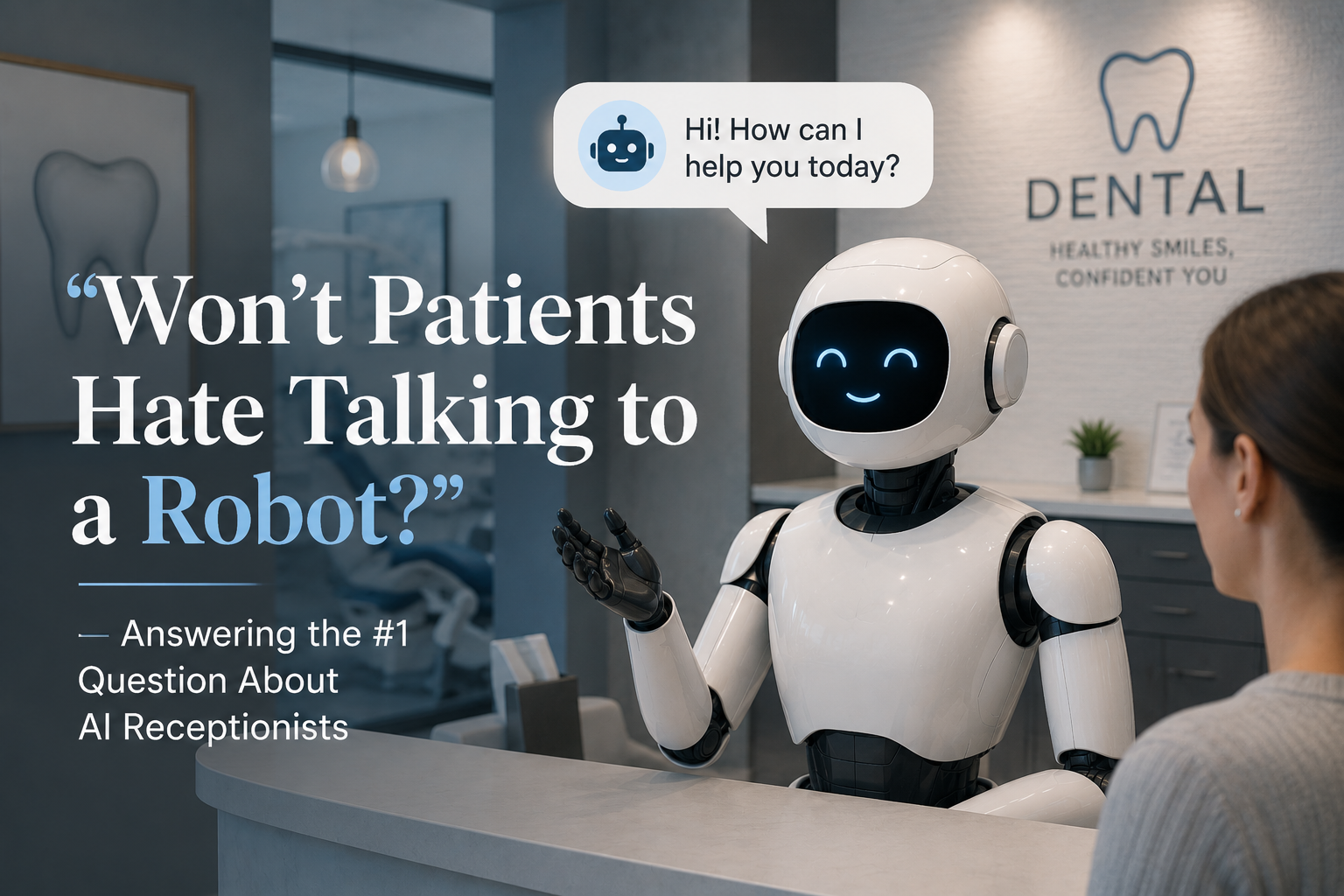
It's the first thing most dentists ask. And it's a fair question, nobody wants to hand off patient interactions to something that makes people feel like they've called a bank's fraud hotline.
But here's what the concern usually misses: patients aren't comparing your AI receptionist to your best front desk coordinator on a calm Tuesday morning. They're comparing it to four rings and a voicemail. They're comparing it to being put on hold mid-sentence. They're comparing it to an inquiry they sent on Sunday night that nobody answered until Wednesday.
That's the real benchmark for AI receptionist dental patient experience. And once you frame it that way, the question changes entirely.
"Patients will find it off-putting and impersonal."
This one comes up constantly, and it collapses under scrutiny.
Patients don't hate AI. They hate bad experiences. Long hold times, dropped calls, voicemails that never get returned, front desk staff who sound distracted because they're juggling three things at once. These are the interactions that erode trust and send new patients to whoever picks up next.
A well-built AI voice agent doesn't trigger that frustration. It picks up immediately. It's calm, focused, and consistent. It doesn't put anyone on hold to check the schedule. It doesn't get flustered when a patient changes their preferred day halfway through a call.
What patients actually dislike is feeling like their time doesn't matter. An AI that answers instantly and handles the call smoothly signals the opposite of that.
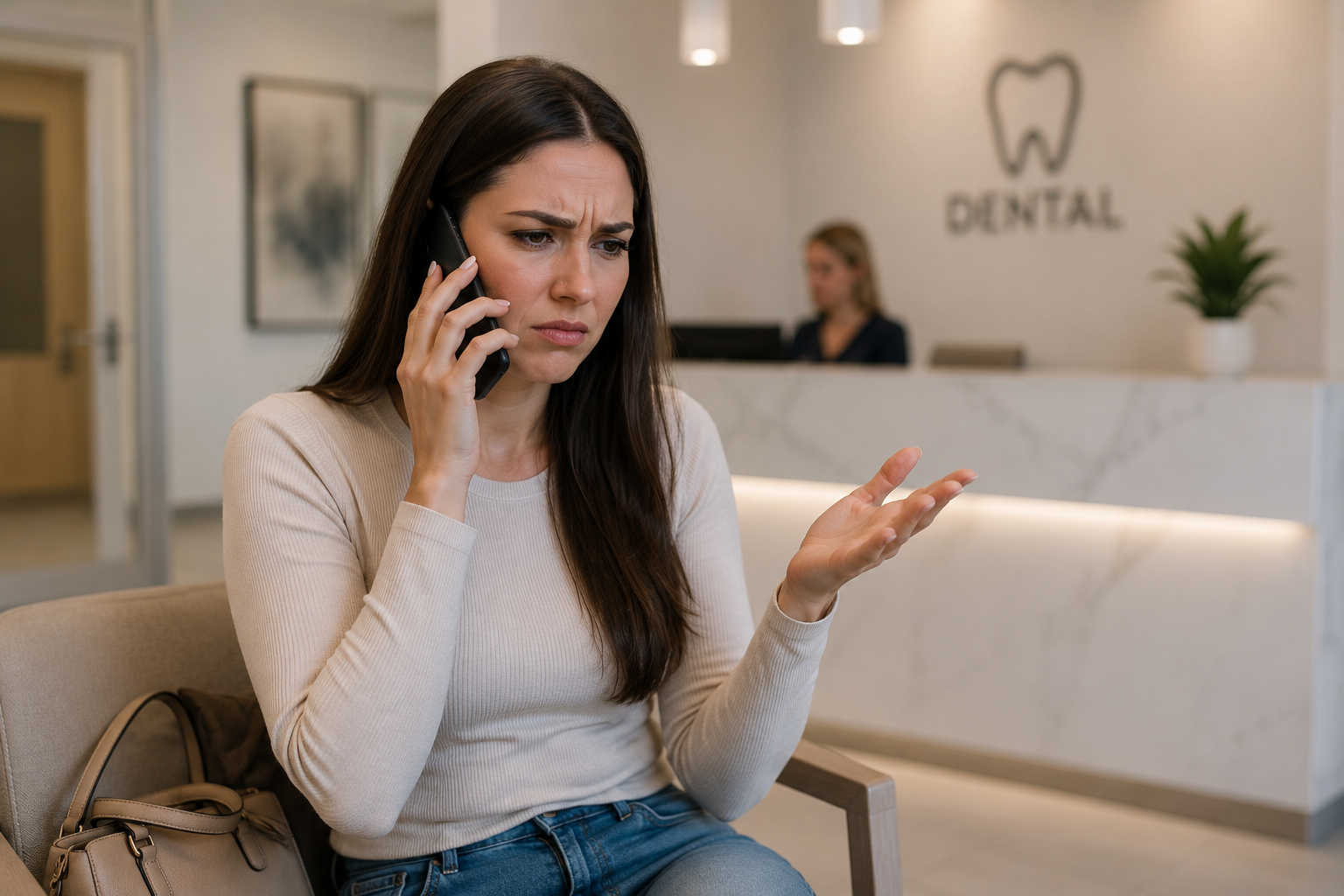
"It's going to sound like a robot reading a script."
This is where most people's mental image is about five years out of date.
Modern AI voice agents built for healthcare aren't the robotic, pause-heavy systems you remember from early phone automation. They handle natural conversation, including patients who interrupt, change their mind, ask follow-up questions, or aren't sure what type of appointment they need.
The difference in patient experience between a clunky automated system and a well-designed AI receptionist is significant. One sounds like a frustrating phone tree. The other sounds like a well-trained staff member who happens to be available at 9 p.m. on a Sunday.
The honest answer here isn't "trust us, it sounds great". It's go listen to it yourself. That's exactly what the demo at everguide.io is for.
"First impressions are too important to leave to an AI."
Agreed — which is exactly why leaving them to voicemail is such a problem.
Over 70% of new dental patients form their first impression of a practice on that initial phone call. Not the website. Not the reviews. The call. Which means the practices letting calls go to voicemail are actively damaging their first impression with a significant portion of their new patient pipeline. And they're doing it invisibly, because those patients simply don't call back.
Think about the last time you called a business, got voicemail, and thought: great, I'll wait for them to get back to me. More likely, you called the next option.
Your patients do the same thing. First impressions aren't being protected by skipping the AI, they're being forfeited.
"What if a patient has a complex question the AI can't handle?"
This is where the design of the system matters, and a good AI receptionist is built with clear handoff logic.
It handles what it's designed to handle: scheduling, rescheduling, confirmations, basic FAQs, after-hours inquiries. When a conversation moves outside that scope, a clinical concern, a billing dispute, something that genuinely needs a human. It routes appropriately, takes a message, or flags for follow-up.
The question isn't whether an AI can replace every possible interaction your front desk has. It's whether it can handle the high-volume, repeatable ones reliably, and whether doing so frees your team to give their full attention to the interactions that actually need a human touch.
The answer to both is yes.
The Real Question to Ask Yourself
It's not "will patients mind talking to an AI?" Most won't, and many will prefer the experience to the alternative.
The real question is: do your patients prefer voicemail?
Because that's the actual choice on the table for every call that comes in during a busy check-in, during lunch, after hours, or on a Sunday evening. Not AI versus your best coordinator. AI versus no answer at all.
Put it that way, and the hesitation tends to disappear quickly.
The best way to settle this isn't to debate it. It's to hear the experience directly. Try it yourself at everguide.io and see what your patients would actually encounter.